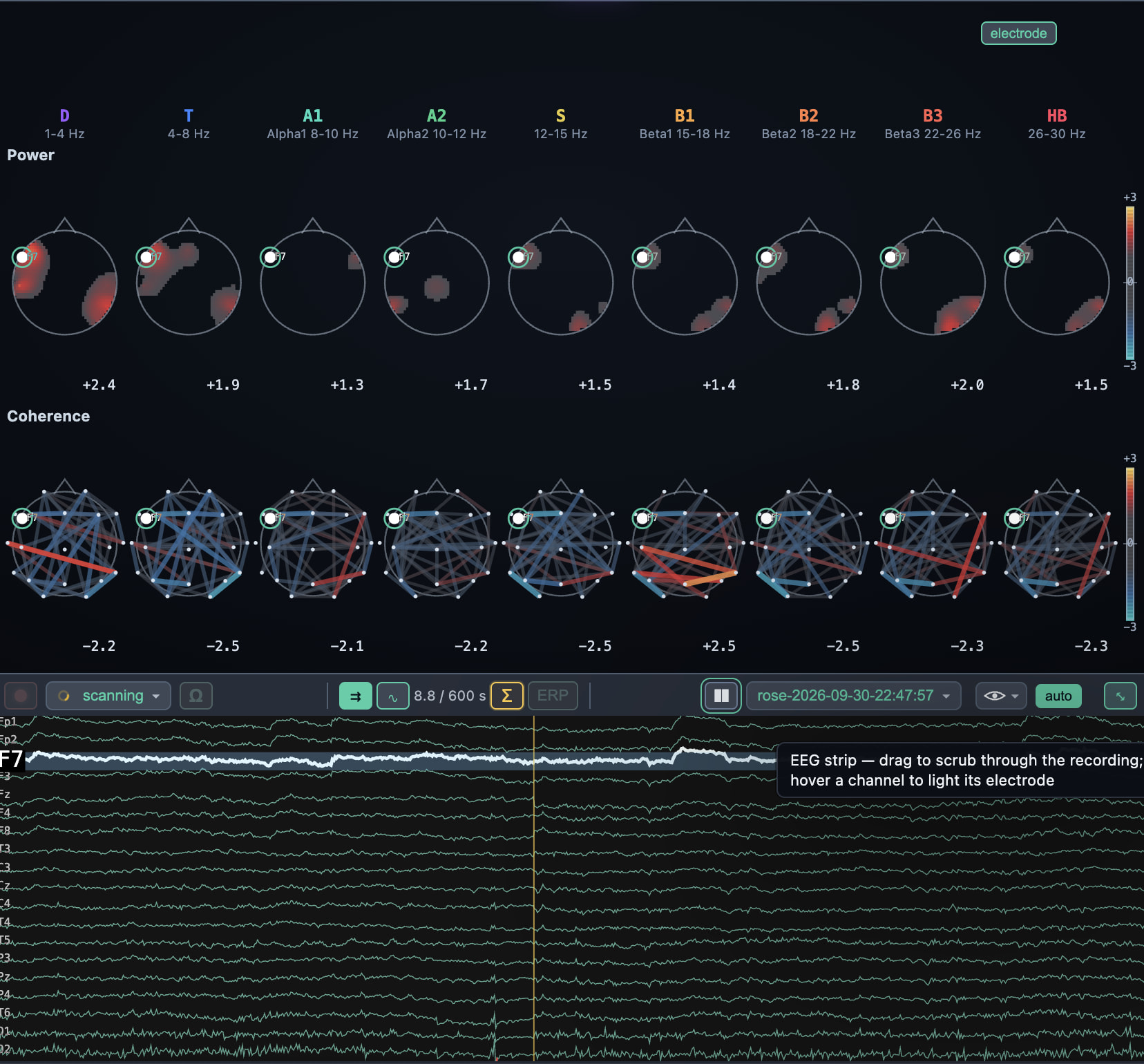
I’d like to find a Normative Database so I can compare EEG data I get from my OpenBCI to a baseline. Getting Started with Neurofeedback mentioned two Normative [Q]EEG Database options: NxLink and NeuroGuide.
However, the NxLink (billed as a “powerful new software package for IBM P.C.'s”) looks fairly antique and is priced between 2,000 and 7,000 dollars. That’s a bit above my pay-grade. NeuroGuide has similar drawbacks.
My question: is there a free / open-source / affordable normative EEG database that I can use with the OpenBCI? It doesn’t have to be huge (NxLink has data from ~700+ people), just something to get a baseline from.
Hi @wmvanvliet, it’s a pleasure say hello to you. I have a doubt with this site, I don’t know how to download the databases, do you know how to download them and what programs you need?? Thanks a lot and greetings fom Venezuela.
Normative databases are carefully constructed by statistical experts to contain only healthy individuals, a ‘normative’ population for comparing QEEG recordings.
An alternative system you might look into is called the Swingle ClinicalQ, an abbreviated ‘QEEG’ with smaller number of channels. It does not use a normative database, but rather ‘norms’ observed over many years of practice by Dr. Swingle.
George Martin posted recently, about a possible version for OpenBCI.
There is a tutorial book by Dr. Swingle. At one point, there was an Excel spreadsheet where you could enter your measurements of the 10-20 sites, and get protocol recommendations.
Pasted below the Gemini AI info. Formatting is a bit wonky, so probably better just to click the link.
AI Overview
AI Mode reply for cuban, dortmund, lemon EEG
The terms Cuban, Dortmund, and LEMON refer to three major open-access, resting-state electroencephalogram (EEG) neuroimaging datasets:
Georgia Longevity Alliance
The Cuban Human Brain Mapping Project (CHBMP): A large-scale normative database featuring high-density resting-state EEG alongside MRI data collected from healthy participants in Cuba.
The Dortmund Vital Study: An extensive dataset tracking healthy cognitive aging, which includes 64-channel resting-state EEG recordings taken before and after demanding cognitive tasks.
The MPI-LEMON Dataset (Max Planck Institute Leipzig Mind-Brain-Body): A publicly available dataset of over 200 young and elderly healthy adults containing resting-state fMRI, 62-channel EEG, and physiological metrics.
International Neuroimaging Data-sharing Initiative +2
Scientific Context: The April 2026 Study
These three specific datasets were evaluated together in a prominent April 2026 neuroscience paper titled “Three Pre-registered Null Results for EEG Binary Transition Rate as an Aging Biomarker” authored by Jaba Tqemaladze.
The study conducted exploratory wideband analyses to test Ze Vectors Theory (ZeVT). The theory hypothesized that a biological metric known as the binary transition rate (ν) (the frequency of sign switches in a binarized time series) approaches a universal mathematical constant {removed symbol} in young adults and reliably declines with aging.
ResearchGate +2
However, across the Cuban, Dortmund, and MPI-LEMON cohorts, the confirmatory tests yielded null results, demonstrating no robust, statistically significant age-related differences in standard EEG frequency bands (delta, alpha, and gamma). The researchers concluded that standard scalp EEG lacks the frequency resolution required to support the theory, shifting future aging biomarker efforts toward high-frequency neural signals and heart rate variability (HRV).
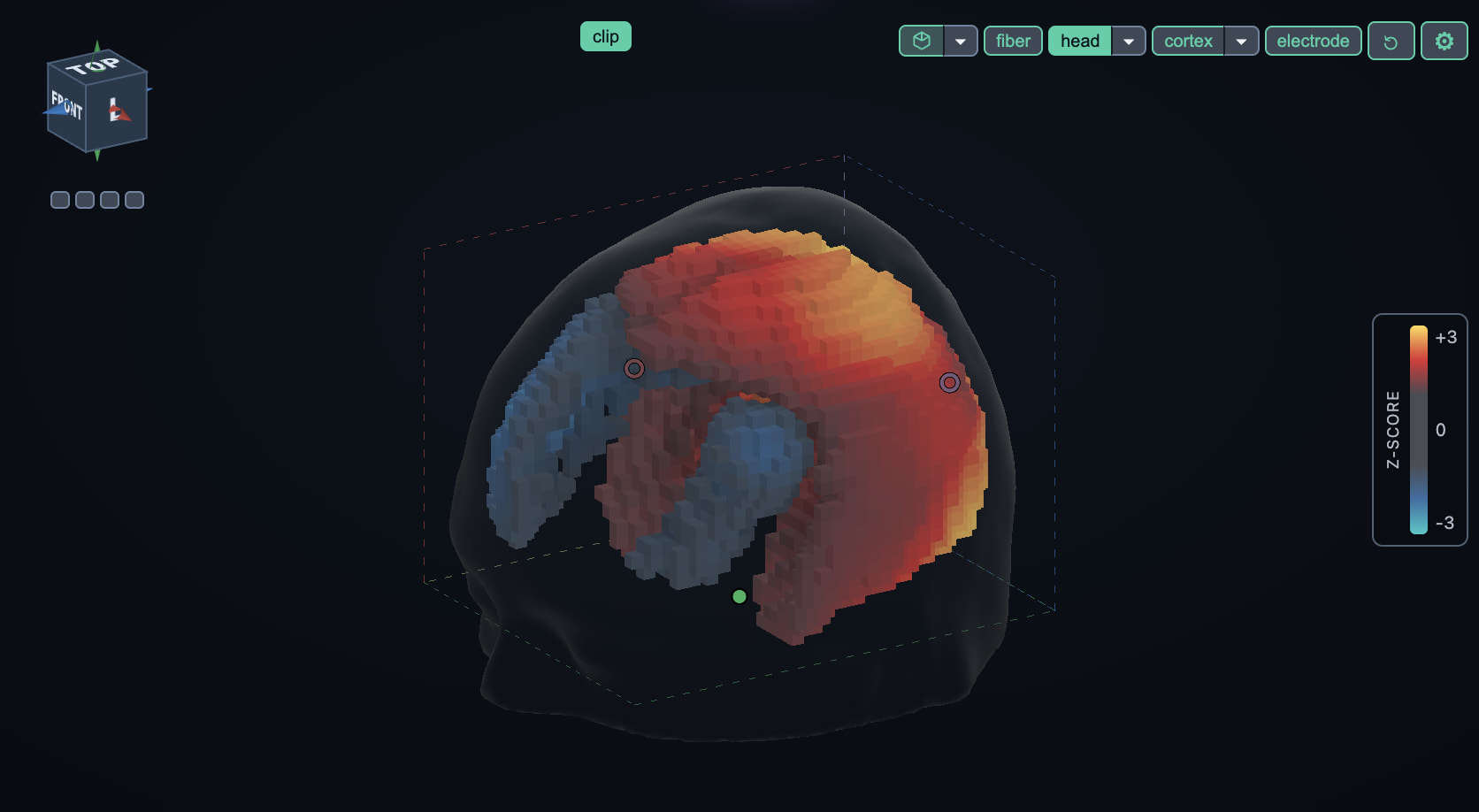
Yeah I don’t use the studies for their intended purposes, most of neuropsychology looks like overfitting data to an idea… But I use their source EEG to bake my own swLORETA normative db.
Initially I used Dortmund and it was funny because my own brain zscore was around |z|<1 and I know that’s not the case in some spots. So I looked a their subject filtering and … there is none, all he subjects are self reported (lol) so you don’t know what kind of crazies are in there skewing the data.
Then I found that LEMON tests their subjects, at least drug urine test, self reported smoking addiction, IQ and a few more. After removing all those you end up with a very small subset and there is a huge gap between 35 and 55. I made some bold assumptions that linear interpolation works ok but off course, DORTMUND being useless, I have no way to test that. Kinda hacky but voxel z-score looked closer (yay science!).
Cuban has health but I haven’t gotten to sift through the 32GB dump that’s sitting on my drive. No age hole tho. Could work.
Another source I was counting on was the University of Hanoi… oh boy is that another story
Fascinating! Can you give more details? Aren’t some of these studies using large channel counts like 32 or 64? Did you interpolate that down to 19 or less? Using OpenBCI 16 channels?
Are you generating QEEG-like maps from this? Or also doing Z-score training? Is your platform on Github? What has been your impression of the neurofeedback training you are doing? Noticeable shifts in perception / functioning?
Yes, downsampled to 19 electrodes which seems to be the 10-20 standard that most manufacturers use. I have a DSI-24 but many Deymeds are out there so I can compare signal quality easily, which 16 can’t do for me, yeah I was considering a openBCI device before I got my hands on a busted DSI.
Cz SMR, everybody knows it, it’s a good one when bounded in T and HB. It is curretnly helping someone sleep like a baby but as I’m writing this, I’m wondering if it’s not also bringing back unpleasant memories, I just opened a tracking note on this.
When Cz hits a wall, I start z-score training. Very effective but there is a feeling of lethargy, and at the same time very sharp and not missing a beat. It’s very weird to be relaxed and tuned in like that.
Big bonus is the sense of touch upgrade to HD, which is weird when you feel all the tiny vortices when swimming.
Also tried the social brain network, it seems to work at balancing the internal peace, but I’d need to do that on other people because N=2 isn’t super relevant.
 Scientific Context: The April 2026 Study